
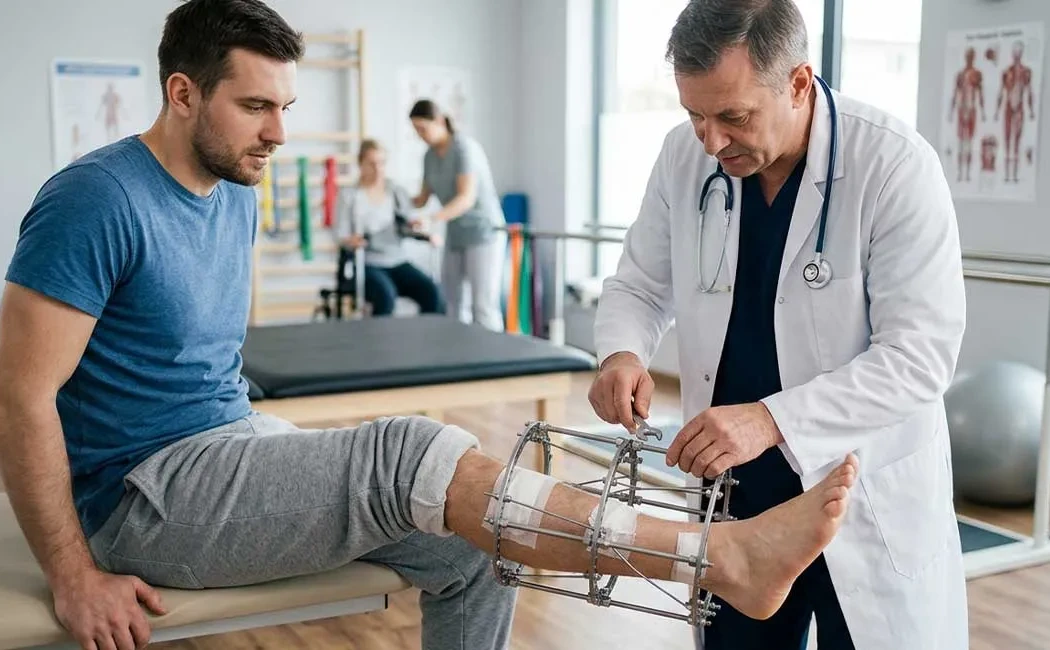
Recognized as a pioneering approach in orthopedics and traumatology, Ilizarov surgery is a biological method primarily used to treat complex bone deformities, limb length discrepancies, and non-healing fractures. Developed by Prof. Dr. Gavriil Abramovich Ilizarov, this technique involves the controlled surgical cutting of bone followed by gradual lengthening using an external fixation device. By harnessing the body’s own regenerative capacity, this method stimulates new bone and soft tissue formation and is currently enhanced by modern technology.
What Is Ilizarov Surgery?
Ilizarov surgery is a surgical technique based on a biological principle known as "distraction osteogenesis," which enables the gradual regeneration of bone tissue. The procedure involves surgically weakening the bone in a controlled manner, then slowly pulling the bone segments apart at a rate of about 1 millimeter per day using an external circular or monolateral fixator. The resulting gap triggers the body’s natural healing process to generate new bone tissue. Along with bone, blood vessels, nerves, muscles, and skin extend and adapt to the new length.
History and Development of the Ilizarov Method
Developed in the 1950s in Siberia by Prof. Dr. Ilizarov, this method initially targeted war injuries and complex fractures. It was introduced to the Western medical community in the 1980s and has since been continuously refined. Today, alongside classical circular fixators, modern computer-assisted and more ergonomic designs are utilized. For more detailed information on the method’s mechanics and biology, see our article on The Role of the Ilizarov Technique in Bone Deformities.
How Does the Ilizarov Fixator Work?
The Ilizarov fixator is an external device typically constructed from circular metal rings, secured to the bone via thin wires (K-wires) or thicker screws (Schanz screws). It stabilizes bone fragments while allowing controlled movement.
Indications for Ilizarov Surgery
Ilizarov surgery is an alternative technique when conventional orthopedic treatments are insufficient or risky. It is applicable across a wide range of conditions in both pediatric and adult patients.
Deformity Correction and Limb Lengthening
One of the most common uses is correcting congenital or acquired limb length discrepancies. Among limb lengthening procedures, Ilizarov offers one of the highest degrees of biological compatibility and effectiveness in addressing leg length inequality. It is frequently used for correcting angular deformities such as knock-knees (genu valgum) or bowlegs (genu varum), within the scope of lower limb deformity surgery. It is also applied successfully for upper limb shortening requiring lengthening procedures.
Non-Union, Infection, and Post-Trauma Cases
In cases of pseudoarthrosis (non-union fractures), especially those accompanied by bone loss or infection (osteomyelitis), Ilizarov surgery plays a critical reparative role. It allows removal of infected bone tissue and filling of the defect through bone transport techniques. Additionally, it is a primary treatment during surgical management of congenital deformities such as fibular hemimelia or tibial hemimelia. Biological treatment approaches for challenging cases can be explored further on our page about Latest Biological Approaches in Non-Union Fracture Treatment.
Treatment Process: Planning, Surgery, and Recovery
Ilizarov treatment is a comprehensive, multi-month process encompassing preoperative planning, surgery, latency, distraction (lengthening), and consolidation (bone healing).
Preoperative Preparation
Successful treatment requires detailed radiological assessment and precise planning. Bone quality, severity of deformity, and soft tissue condition are evaluated. The patient’s psychological readiness for a long treatment duration is also a key factor. Psychosocial preparation prior to limb lengthening surgery is discussed in our article on Psychological Preparation Before Limb Lengthening Surgery.
Surgical Steps
Surgery is typically performed under general or spinal anesthesia. The bone is cut using low-energy techniques (corticotomy) to minimize damage to surrounding tissues, followed by application of the fixation device. For more detailed steps, see Ilizarov Technique in Limb Lengthening Surgery.
Living with the Fixator and Recovery Process
Postoperatively, patients adjust the screws or knobs on the fixator as prescribed by their physician to gradually lengthen or correct the bone. Regular wound care and physiotherapy are essential throughout. Adherence to rehabilitation protocols after surgery is critical and can be reviewed in Postoperative Rehabilitation Phases.
Risks and Potential Complications
Like all surgical interventions, Ilizarov surgery carries certain risks. The most common complication is infection around wire insertion sites, generally manageable with oral antibiotics and careful dressing changes. Other possible issues include muscle tightness, joint stiffness, or nerve compression during lengthening. Treatment outcomes are closely linked to patient compliance and the expertise of the surgical team, as detailed in Success Rates of Ilizarov Deformity Surgery.
Non-union risk is higher in patients with poor biological healing potential. In such cases, additional surgical techniques in Non-Union Surgery Methods and Surgical Approaches in Non-Union Femur Fractures may be necessary.
Prof. Dr. Halil İbrahim Balcı’s Experience in Ilizarov Surgery
Ilizarov surgery demands a steep learning curve with outcomes closely tied to surgical expertise. Prof. Dr. Halil İbrahim Balcı has broadened his expertise through national and international experience in this domain.
Training and Contributions at the Paley Institute
Prof. Dr. Balcı served as a research fellow and observer at the Paley Orthopedic & Spine Institute in the United States—one of the world’s leading centers for deformity surgery and limb reconstruction. Collaborating with Dr. Dror Paley, he gained in-depth experience in complex deformities, congenital deficiencies, and advanced Ilizarov techniques.
Contributions to Modern Applications
Prof. Dr. Balcı integrates classical Ilizarov techniques with modern technological advances to provide patients with more comfortable and effective treatment options. His academic publications contribute to ongoing scientific research in this field.
References and Information Notice
This content is based on data from PubMed, the American Academy of Orthopaedic Surgeons (AAOS), and the Turkish Association of Orthopaedics and Traumatology (TOTBİD).
All information provided is for general informational purposes only and does not constitute medical advice. The content is not a substitute for individual diagnosis, treatment, or professional guidance. Diagnosis and treatment should only be planned following an in-person consultation with a qualified healthcare provider. Since each patient's clinical condition is unique, surgical or non-surgical interventions may vary accordingly. The information presented is based on current scientific sources and up-to-date medical practices.