
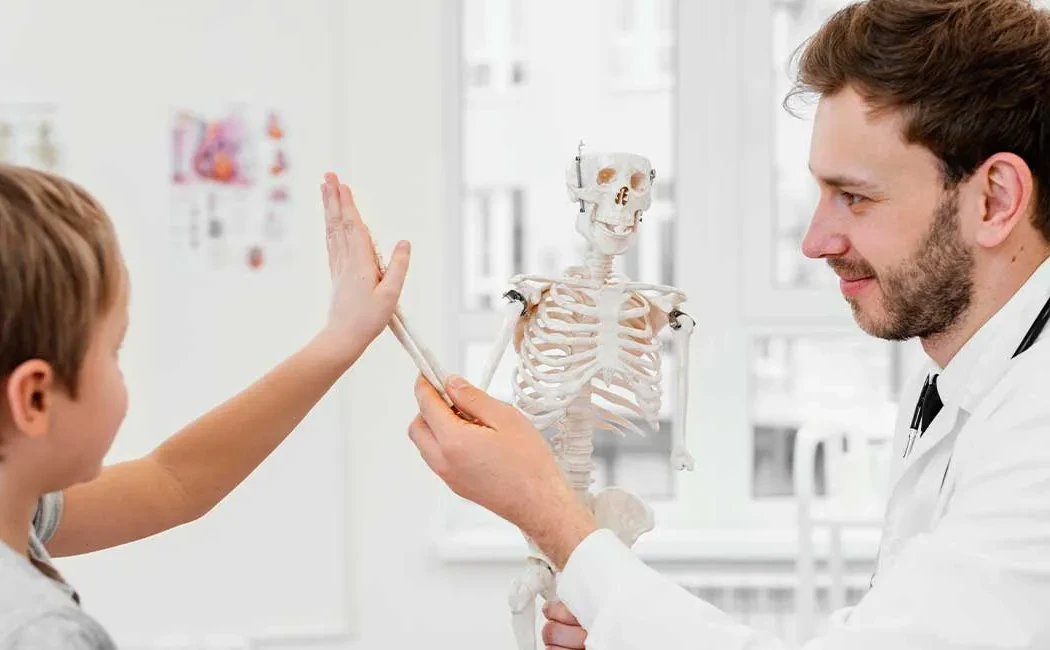
Childhood is a critical period in which bones and the skeletal system develop rapidly. Bone development disorders that arise during this time can have serious impacts on quality of life. Early diagnosis and appropriate treatment contribute significantly to the healthy growth and development of the child. This article provides a detailed examination of common bone development disorders in children, diagnostic methods, as well as surgical and conservative treatment options.
Definition and Classification of Bone Development Disorders
Bone development disorders can be defined as conditions, either congenital or acquired, that cause abnormalities in bone length, shape, or structure. These include a variety of categories such as bone deformities, growth plate issues, nonunion problems, infections, and bone tumors.
Among congenital deformities, flexion or valgus deformities, congenital hip dysplasia, or asymmetry in body segments are frequently observed. Acquired disorders include traumatic nonunion, osteomyelitis due to infection, and growth plate injuries.
Diagnostic Methods
A thorough clinical examination is paramount in diagnosing bone development disorders. Monitoring a child's growth, inquiring about pain or functional limitations are important steps. Imaging techniques include direct radiographs (X-rays), magnetic resonance imaging (MRI), and computed tomography (CT). In advanced cases, bone scintigraphy or ultrasonography may also support diagnosis.
Specific methods have also been developed to assess damage to growth plates. These evaluations help determine whether growth has ceased and whether deformities are progressing.
Major Types of Bone Development Disorders in Children and Treatment Approaches
1. Limb Lengthening and Cosmetic Lengthening Surgery
Short stature in children may cause psychosocial problems. Bone lengthening surgeries are performed using the Ilizarov method and modern external fixator techniques. These surgical methods rely on the principle of distraction osteogenesis, which involves controlled bone fracture and new bone formation.
During this process, regular follow-up of the patient and physiotherapy support to preserve muscle function are essential for successful outcomes. Long-term monitoring evaluates bone union and deformation formation.
2. Nonunion and Deformity Surgery
Failure of bone fractures to heal in the expected timeframe (nonunion) poses a serious problem in children. Surgical intervention is required for nonhealing bones. Techniques include excision, refreshing the fracture site, autologous bone grafting, or using vascularized grafts. External fixators and new generation biomaterials improve treatment outcomes.
Deformities may develop due to growth plate problems or trauma. Surgical techniques correct deformities, and osteotomy may be performed to realign bone axes if necessary.
3. Bone and Soft Tissue Infections
Osteomyelitis in children can cause acute or chronic bone infections. Early antibiotic treatment is crucial in diagnosis. In advanced infections, surgical debridement and use of vascularized grafts are necessary. A multidisciplinary approach is required during this process.
4. Bone Tumors
Benign and malignant bone tumors are rare in children but require meticulous diagnosis and treatment. Following biopsy, surgical resection, chemotherapy, and radiotherapy protocols are applied. Early diagnosis and a multidisciplinary approach are of vital importance.
5. Orthopedic Problems Related to Sports Injuries
In active children, bone and joint problems caused by sports must be detected early. Meniscus and ligament injuries as well as growth plate damages are significant. Arthroscopic and minimally invasive surgical techniques are preferred in treatment.
Recommendations for Protecting Children's Bone Health
Adequate nutrition (calcium, vitamin D), regular physical activity, and proper sleep are essential for healthy bone development. Moreover, early intervention in sports injuries and prevention of growth plate damage play critical roles.
For early diagnosis, regular monitoring of growth charts and expert evaluations in suspicious cases are recommended. Pediatric orthopedic specialists provide guidance on skeletal system problems and plan surgical interventions when necessary.
In summary, bone development disorders in children require a multidisciplinary approach. Accurate diagnosis, treatment, and follow-up processes enhance the quality of life and functional capacities of affected children.