
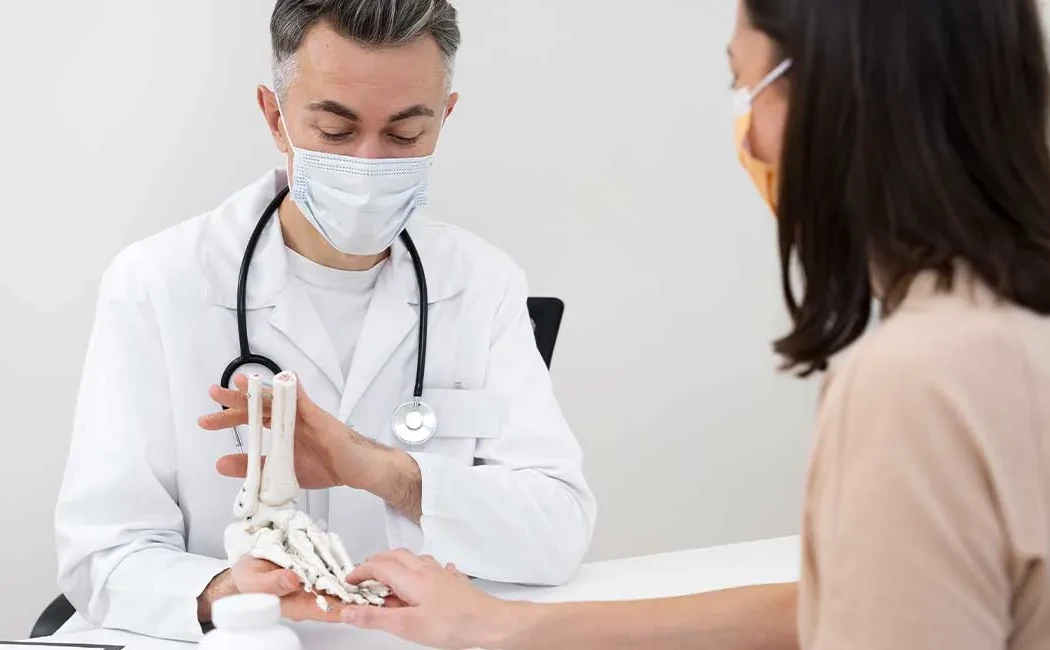
Bone healing is the process of bone tissue repair, which naturally occurs in most cases. However, sometimes, for various reasons, healing does not occur at the fracture site; this is called non-union. Non-union can cause severe movement restrictions, pain, and decreased quality of life for patients. Treatment of non-union in orthopedics is an important issue requiring both a challenging and multidisciplinary approach.
Causes and Classification of Non-Union
The underlying causes of non-union are generally classified into biological and mechanical factors. Biological causes include infection, inadequate blood circulation, defective cellular healing capacity, and systemic diseases such as diabetes and smoking. Mechanical causes involve instability at the fracture site, malalignment of the fracture, and insufficient surgical fixation techniques.
Non-union is typically classified into three forms:
1. Atrophic non-union: Characterized by very low biological activity at the bone ends, insufficient blood flow, and a deficiency of fibroblasts.
2. Hypertrophic non-union: Adequate biological activity exists, but mechanical stabilization is inadequate. Hypertrophic bone formation is observed at the fracture ends.
3. Infected non-union: A severe inflammatory reaction caused by the presence of microorganisms at the fracture site prevents healing.
Biological Approaches
Biological treatment in non-union aims to enhance the bone's healing potential. Especially in atrophic non-union, improving the biological environment is the primary strategy.
- Bone Grafts: Autologous grafts (taken from the patient's own bone marrow) are the most commonly used biological agents. Thanks to their osteogenic, osteoinductive, and osteoconductive properties, they support fracture healing.
- Growth Factors: Notably, Bone Morphogenetic Proteins (BMPs) promote the proliferation and differentiation of bone cells. Clinical use of BMP-2 and BMP-7 can accelerate healing.
- Stem Cell Therapy: Multipotent stem cells are injected into the non-union site to increase biological activity. Iliac bone marrow aspirate is a common application.
- Cellular Support and Biomaterials: Biocompatible scaffolds and proteins facilitate cell proliferation and tissue regeneration in the non-union area.
Mechanical Approaches
Mechanical stabilization is a fundamental factor in preventing and treating non-union. Movement at the fracture ends hinders healing, and proper stabilization is essential for recovery.
- Surgical Methods: Fixation devices such as plates, screws, and intramedullary nails are used to stabilize the non-union site. Correct technique and positioning enable mechanical healing.
- Ilizarov Method: External ring fixator systems provide not only stabilization but also allow controlled distraction and compression at the fracture. This method is preferred especially in cases that require simultaneous correction of deformity and bone length.
- Dynamization: Non-invasive methods that slightly move the nail promote healing, particularly in cases using intramedullary nails.
- Weight Bearing and Rehabilitation: Mechanical load is an important factor stimulating bone healing. Properly dosed loading and movement support osteogenesis.
Infection Control
In cases of infected non-union, effective infection control is essential in addition to mechanical and biological treatments. Surgical debridement, antibiotic therapy, and local antibiotic implants are used. Cleaning the infected area restores the biological environment for healing.
Current Combined Approaches in Non-Union Treatment
In non-union treatment, biological and mechanical approaches are combined rather than used separately. For example, while mechanical stabilization is achieved with the Ilizarov method, the biological environment is supported simultaneously by bone grafts and stem cell application. This integrated approach significantly increases success rates.
Personalized treatment planning is essential in non-union surgery. Evaluating the patient's age, general health status, type of non-union, presence of infection, and mechanical issues requires a multidisciplinary perspective.
Finally, thanks to technical advances and progress in biological treatment modalities, non-union problems are now resolved more effectively, allowing patients to regain functional and pain-free lives. Dr. Halil İbrahim Balcı and other orthopedic specialists aim to provide the most appropriate treatment by following scientific developments in the field.