
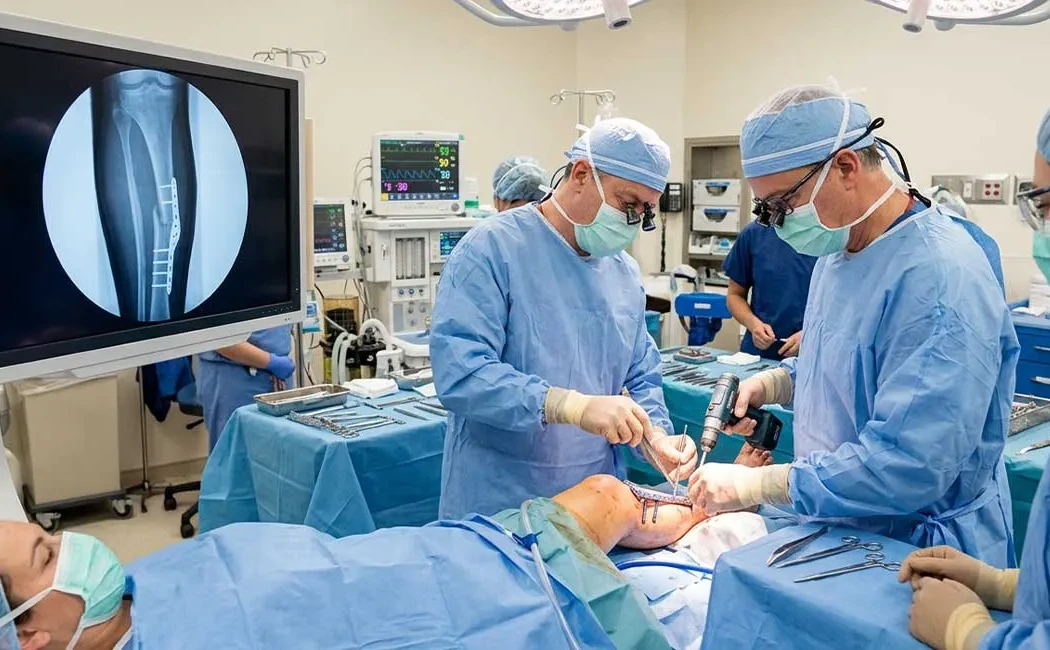
Bone healing after fracture is a complex biological process, and in some cases, the bone may heal in a non-anatomical position. Malunion surgery is a corrective procedure applied when this improper healing impairs bone function, causes pain, or threatens joint health. Such surgery aims to realign the bone properly and prevent long-term joint damage.
Advancements in orthopedic surgery have allowed malaligned bone correction to be planned with high precision. Treatment options include osteotomies, plate and screw fixation systems, and external fixators. This article explores malunion surgery, the techniques used, and the recovery process based on scientific evidence. For more detailed information, you may visit our page on nonunion and malunion treatments.
What is Malunion?
Malunion occurs when a fractured bone heals and consolidates but with a deformity such as angulation, rotation, or shortening. This is not merely a cosmetic issue; it can cause wear on adjacent joints and functional loss.
Definition of Malunion
Medically termed "malunion," this condition describes the healing of a bone away from its original axis. The deformity may occur in the coronal, sagittal, or axial planes. Malunion treatment is tailored according to deformity severity and patient symptoms. Mild deformities without functional limitation may not require surgery, but those affecting joint mechanics necessitate intervention.
Causes of Malunion
The primary causes of malunion generally stem from problems at the time of fracture or during treatment, including:
- Inadequate Reduction: Failure to properly align fracture ends at initial treatment.
- Insufficient Stabilization: Inadequate immobilization through cast or surgery.
- Premature Weight Bearing: Applying load before the bone has sufficiently healed.
- Biological Factors: Patient metabolic conditions or habits such as smoking impair healing.
What is Malunion Surgery (Corrective Osteotomy)?
Malunion surgery involves surgically cutting the bone (osteotomy) in a controlled manner to realign it correctly and then stabilizing it again. This procedure restores the mechanical axis of the limb, balancing the load distribution on joints.
When is it Necessary?
Not all malunions require surgery. Indications include:
- Persistent and severe pain.
- Restricted joint range of motion.
- Limb shortening or visible deformity.
- Joint incongruence potentially leading to osteoarthritis.
- Significant interference with daily activities.
Which Bones Can be Treated?
Corrective surgery can be applied to nearly any bone but is most often performed on the weight-bearing bones of the lower extremity (femur and tibia). It is also indicated in upper extremity bones such as the wrist (radius), arm (humerus), and clavicle when functional impairment exists.
Surgical Methods and Procedure
Treatment planning involves detailed radiographic analysis and sometimes 3D CT scans. Malunion surgery treatment options are selected based on patient age, bone quality, and deformity type.
Open and Closed Wedge Osteotomies
Osteotomy techniques are classified mainly as open wedge and closed wedge. In open wedge osteotomy, the bone is cut and the gap opened to achieve the desired angle, often filled with bone graft. Closed wedge osteotomy involves removal of a wedge-shaped bone segment to correct alignment.
These surgical techniques are commonly used in lower limb deformity surgery. In cases combining malunion with nonunion, nonunion surgical options may be integrated. Likewise, upper extremity deformity and lengthening surgery principles apply when needed.
Ilizarov and External Fixator Techniques
In complex deformities, high infection risk cases, or limb length discrepancies, the Ilizarov method or modern external fixators may be preferred. These allow gradual correction of the bone. Studies (Source: PubMed) support the efficacy of these methods for multi-planar deformities.
Surgical Procedure and Preparation
Preoperative assessment includes general health evaluation and anesthesia planning.
Managing patient expectations before surgery is crucial. Detailed information about procedures such as cosmetic limb lengthening and deformity correction helps patients prepare mentally and physically.
Postoperative Recovery and Rehabilitation
Successful outcomes depend on thorough rehabilitation as much as the surgery itself. Recovery times vary according to bone healing rates.
Physical Therapy and Gradual Loading
Postoperative therapy to maintain joint mobility and strengthen muscles is essential. Bone healing is monitored radiographically, and weight bearing is increased progressively as permitted.
Our post-malunion surgery recovery guide details precautions and timelines for optimal healing.
Recovery Timeline and Follow-up
Complete recovery can take from 3 to 6 months, influenced by factors such as smoking which may prolong healing. Regular follow-up appointments are vital for early complication detection and management.
Potential Risks and Complications
Like any surgery, malunion surgery carries certain risks, which patients must understand as part of informed consent.
Surgery-Specific Risks
- Infection: Possible at the surgical site or within the bone.
- Nerve and Vessel Injury: Nearby tissues may be inadvertently damaged.
- Nonunion: Osteotomy site may fail to heal properly.
- Implant Issues: Screws or plates may loosen or break.
Medical Disclaimer
The information provided here is for general educational purposes and not medical advice. Each patient's case is unique, and treatment plans should be developed by an orthopedic specialist after thorough clinical evaluation. Surgical decisions require careful consideration of risks and benefits.
Alternative Treatments and Emerging Developments
Besides surgical correction, biological therapies supporting bone healing are gaining importance. Stem cell treatments and growth factors may accelerate recovery, particularly in high-risk patients. Research on new biological approaches for nonunion fractures supports these methods’ contributions to bone regeneration (Source: Mayo Clinic).
Conclusion and Advisory Note
Malunion surgery offers effective correction that can significantly improve quality of life, reduce pain, and restore function in appropriate patients. Success depends on experienced surgical teams, precise planning, and patient compliance. Individuals experiencing bone deformity or functional loss are advised to seek evaluation by a qualified orthopedics and traumatology specialist.
All information provided is for general informational purposes only and does not constitute medical advice. The content is not intended to replace professional diagnosis, treatment, or guidance. Diagnosis and treatment must be determined through an in-person consultation with a qualified healthcare provider. Since each patient's clinical condition is unique, surgical or non-surgical interventions may vary on an individual basis. The information is prepared based on current scientific sources and up-to-date medical practices.